
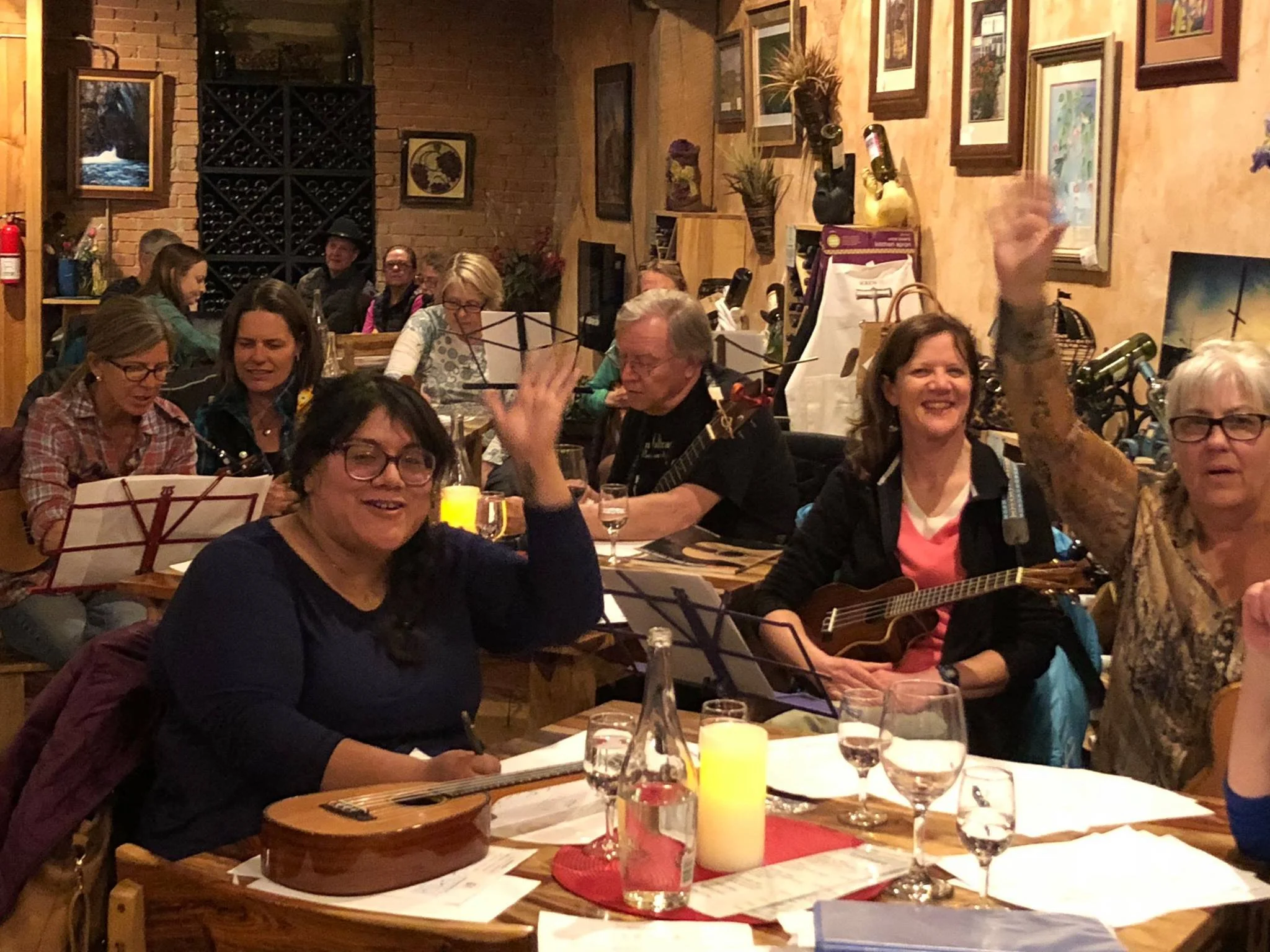
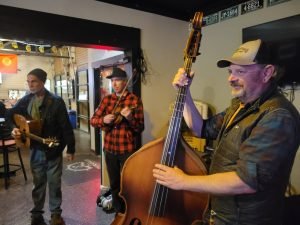
 On a Thursday night in Durango, if you follow the sound of strings through the clinking of glasses downtown, you’ll find a circle of acoustic musicians leaning in close, listening for who will take the next break. Across town, a cluster of ukulele players settles into the front room of a winery—first the warm-up strums, then the laughter as everyone flips to the same page of the songbook. And on some evenings at the Durango Public Library, a quieter, more acoustic energy fills a community meeting room as the Folk Jam gathers—a welcoming mix of guitars, fiddles, banjos, mandolins, and the occasional mountain dulcimer.
In a town this size, you might expect a few bands and open mics. What you might not expect is a full-blown jam session culture—a musical ecosystem that quietly, consistently, and joyfully exists across Durango and the Four Corners. It’s informal, intergenerational, welcoming, and distinctly Southwestern: part mountain-town tradition, part community ritual, part open invitation.
What Exactly Is a Jam?
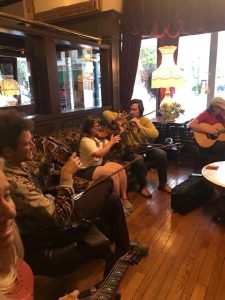 A jam session is one of the most democratic spaces in music. There is no single definition—because different genres shape their jams in various ways. In jazz, blues, and funk settings, there’s often no set list at all: someone calls a tune, the rhythm section locks in, and players take turns improvising as the music unfolds in real time. In folk, old-time, and bluegrass circles, jams typically follow familiar traditional tunes played by ear, with musicians joining the melody or rhythm as they know it. And in acoustic-community settings—like ukulele jams or themed folk gatherings—you might find song sheets, lyric books, or even a planned theme for the night to help players of all abilities follow along.
Across all these formats, jams are meant for participation, not perfection. They’re forgiving spaces where missed chords add to the charm, where newcomers are quietly welcomed into the sound, and where seasoned players stretch their creative muscles in ways formal gigs can’t. At their best, jams are musical conversations—open, evolving, and shaped by the people who show up.
A Little History: From Kansas City to the Kitchen Table
Jam sessions have deep roots.
In the early 20th century, after-hours gatherings in Kansas City provided jazz musicians with a space to explore and innovate beyond strict dance-hall repertoires. Later, the legendary late-night sessions at Minton’s Playhouse in 1940s New York became the origin of bebop.
Meanwhile, in Appalachia and early bluegrass communities, jam sessions played around porches, kitchen tables, and festival campgrounds. Tunes were passed ear-to-ear, keeping musical traditions alive through active, shared practice.
Those improvisational and folk traditions eventually spread into public spaces we recognize today: community music rooms, pubs, back patios, coffeehouses, libraries—and, here in Durango, into a thriving local culture.
Southwest Colorado Joins the Circle
In Durango and nearby towns, jam sessions flow through the week in a patchwork of musical styles.
Bluegrass and old-time pickers have long made this their home, gathering in rotating spaces—from breweries to backyards—for weekly or monthly jams. These sessions are informal and acoustic, rooted in the tradition of passing tunes by ear. A fiddler might start Whiskey Before Breakfast, and quickly the circle fills in—guitars locking into rhythm, mandolins tracing melodies, banjos adding sparkle. Although venues change over the years, the close-knit picking community remains one of the strongest musical threads in the region.
The Folk Jam at the Durango Public Library offers a softer, more acoustic atmosphere. Hosted monthly, it brings together musicians of all abilities for folk, Americana, and Celtic tunes in one of the city’s most welcoming public spaces.
Then there’s the Durango Ukulele Club, a shining star in the city’s music scene—and one with a unique origin story. Founded ten years ago by Denise Leslie to create a ukulele community in Durango, the club has grown into a joyful, multigenerational gathering now held monthly at Four Leaves Winery. When COVID hit, the club shifted online, attracting ukulele enthusiasts from across the state and beyond. Many of those players still participate via Zoom, forming a hybrid format where locals meet in person while remote players log in from living rooms hundreds of miles away.
At 11th Street Station, funk, jazz, and groove jams feature electric instruments, horn players, and drummers for improvisational nights that blur genres and encourage creative risk-taking.
Regionally, you’ll find Celtic sessions, songwriter circles, blues jams, and the expansive campground pickin’ that happens at events like Tico Time’s bluegrass festivals. In Pagosa Springs, Mancos, Cortez, Ignacio, Bayfield—and everywhere in between—small but mighty jam communities keep folk, blues, and roots traditions alive year-round.
Why People Keep Coming Back
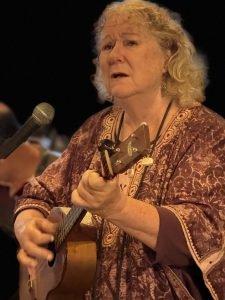 Ask a dozen musicians why they show up, and you’ll get a dozen different answers.
Community. Harmony happens between people who just met. That’s the magic.
Growth. Jams are classrooms in disguise—spaces to push yourself, learn new tunes, and try new skills.
Access. Not everyone wants a band commitment. Jams welcome casual players, beginners, and anyone curious.
Tradition. Music stays alive by being played—not archived.
And above all: no one expects perfection. Just participation.
New to Jamming? Here’s How to Step In
- Listen first, play second.
- Start with rhythm strums until you feel the groove.
- Stand near someone who knows the tune.
- Ask about the jam’s level.
- It’s okay to listen for the first time.
One day, you’re watching from the sidelines. The next, someone nods for you to take a four-note solo—and suddenly, you’re part of the circle.
Jam sessions remind us that music doesn’t need to be polished to be powerful. Sometimes all it takes is a circle of people, a shared tune, and the willingness to let the night unfold. In a world that can feel disconnected, these small gatherings—these circles of sound—quietly stitch community together, one chorus at a time.